Watch, Read, Live, Love

A Renaissance manuscript Latin translation of ...
A Renaissance manuscript Latin translation of The Republic
(Photo credit: Wikipedia)
I just finished reading Plato's The Republic. As I was finishing it, I happened to be sitting across from a kid on Frontrunner who was ALSO READING Plato's The Republic. This prompted him to start a conversation, in which he tried to either sympathize with women, or pick a fight with me. I couldn't tell. He said his favorite part of the book was where Plato advocated the education of women, but it was unfortunate that Plato also claimed they were inferior in every way. I just smiled and told him I was glad he was enjoying the book.

It's funny how strangers can bond over a book. There are forums online where strangers form relationships based on their mutual love of The Harry Potter series, LOTR, and The Twilight Series. Unfortunately, like clubs, political parties, sports teams and religions, it can also create a strong divide.

Some people get unbelievably pissed off when you don't like what they like or believe what they believe. This seems to be a case of intense egocentrism—my way of thinking is the only way of thinking. The obvious case is religion. We don't need to get into that, but child-rearing, book and movie preferences—that's what baffles me.

Years ago, my neighbor asked me if I spanked my children. When I told her that instead, I used time out and other less physical methods, she coldly told me that she spanked her children and that was the only way to effectively discipline them. We never really spoke after that and she stopped letting her children play with my children—like they had the no-spanking disease she was afraid her children would catch. She had asked me a question, not because she really wanted to know the answer, but because she wanted me to confirm that she had made the right parenting decision.

I've been blacklisted for not loving crude humor comedies like Dumb and Dumber and Anchorman. I've been snark-eyed for electing not to read Fifty Shades of Grey or for not loving (or even liking) the Twilight Series.

This morning, I sat across from a 20-something, who was wearing yellow skinny jeans and a scarf. He was alternating between reading a novella and sleeping. Behind him sat a woman, almost completely covered in black cloth, her eyes barely peeking through the material as they scanned her laptop screen. Across from her sat another 20-something wearing a collared shirt and khakis, watching Super Bowl commercials on his iPhone. Behind him, and across from me, sat a woman in her 40s, wearing a bright floral dress, engrossed in a romance novel. I formed the fourth corner of we-come-from-different-places square in my hybrid outfit of office clothes, comfy leggings and scuffed-up boots for the commute, carefully navigating a much-loved copy of Graham Swift's Waterland. We all read or watched what we were reading or watching and got off the train when we were at the appropriate stop. Nothing terrible happened.

The point is, that it doesn't make sense to feel anger towards someone who didn't like Cormac McCarthy's The Road or Suzanne Collins' The Hunger Games Series. Instead of immediately writing off people whose opinions and experiences differ from ours, it would make more sense to listen without judgment to their views. You can agree or not agree, but just maybe you'll expand your horizons a little—I don't mean change your mind even, just understand a different way of seeing the world.
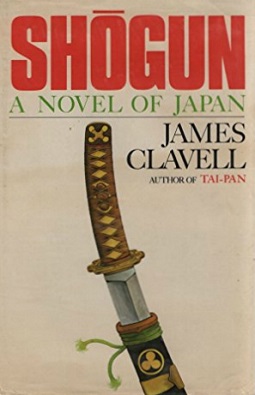
Shōgun
Enter Shōgun by James Clavell—Englishman-meets-Japanese culture. The Englishman thinks the Japanese are barbarians for their tradition of seppuku and sexual diversity. The Japanese think the Englishman is a barbarian for his poor hygiene and food-preparation techniques. Ultimately (a thousand pages later) they come to a mutual understanding, and even respect for each other's culture. They come to understand that there is tradition and belief behind the "barbarism."

See what I did there? We're all just people who have been somewhere, trying to get somewhere with whatever tools and knowledge we have available.

Watch. Read. Live. Love.

Blog off.

Enhanced by Zemanta

Of queries and circuses

The Night Circus by Erin Morgenstern
(photo credit: Wikipedia)
Again with the synopsis. That dirty, dirty nightmare of a word. No one really gets excited when you say synopsis—not fiction writers, college students or, I'm guessing, agents and publishers, since they have to muddle through myriad half-hearted, but well-meaning attempts at boiling a 100,000-word manuscript down to a few pages.
But as annoying as they may be, synopses are important for a few reasons:
  • They help writers focus their plot lines.
  • They are an effective way for the agent/publisher to see if aforementioned writer knows how to tell a story without having to slosh through hundreds of pages to find out.
  • They are great practice for concise writing.
Every writer should want to write a synopsis for every manuscript. And they should do it before they send out their first query letter. Many writers get ahead of themselves and dash off a query letter while they're still editing. This is like auditioning for X Factor after your third voice lesson. If you want to be taken seriously, you won't waste your time and the agent's/editor's. This is how your query checklist should look.
  1. Write manuscript--it seems obvious, but sometimes people try to skip over this step.
  2. Edit manuscript at least twice--no matter how awesome you think it is on the first try.
  3. Let a dozen beta readers read the manuscript and consider their suggestions/comments--you don't have to use all of them, but if five people are telling  you the same thing, maybe you should listen.
  4. Edit manuscript again--until everything flows.
  5. Write query letter--one page to really sell your story.
  6. Edit query letter at least twice--no matter how awesome you think it is on the first try.
  7. Let at least one beta reader read the query letter and consider his/her suggestions/comments--are they dying to read your manuscript based on the query?
  8. Edit query letter again--until everything flows.
  9. Write synopsis--summarize each chapter and condense and hone.
  10. Edit synopsis at least twice--no matter how awesome you think it is on the first try.
  11. Let at least one beta reader read the synopsis and consider his/her suggestions/comments--but only choose the people you don't mind spoiling your story for. The synopsis should include the ending.
  12. Edit synopsis again--until everything flows.
  13. Research agent/publisher--what genres do they represent? What books/authors do they represent?
  14. Make sure your manuscript fits agent/publisher criteria/book list--you're wasting your time and theirs if it doesn't.
  15. Send query letter according to agent/publisher guidelines--they love it when you do this. It's like candy in a rainstorm.
That's right. There are (at least) 15 steps you should take before you send out a query letter. Most importantly, your manuscript should be finished, unless you are pitching a concept, and by the agent's/publisher's guidelines it is okay to do so.Only slightly less important, is the targeted query. It's important for the prospective agent/editor to know they are more than a whim or afterthought. You should know who they are, what kinds of books they represent and which books, specifically, they represent.

I was recently involved in the hiring process for a job that opened up in my company. I got cover letters that were obviously not intended for the job we were looking to fill, and one very unprofessional phone message, during which, the caller forgot a) who she was calling b) which job she was calling about. There was a long, awkward pause while she searched through a pile of papers for the information and ultimately, she named the wrong job. I immediately shredded her resume, and agents and editors will do the same if you send a half-assed query letter. It's about quality, not quantity. It's not how many agents/editors you can annoy, it's about finding the one who's a fit for you and your story.

That's my rant. In other exciting news, I finished reading The Night Circus by Erin Morgenstern last night. It was one of the most beautifully-written books I've ever read. You should read it. Everyone should read it. When they make it into a movie, I'll watch the hell out of it, but it won't be as good as the book.

Blog off.
Enhanced by Zemanta

Nano Update

This is just a quick update to let you know where I am with NaNoWriMo. I'm 14,000+ words in so far and still moving along at a pace of about 2,000 words a day. If you want to creep on me, there is a NaNo counter on my blog now so you can see my progress as I update it.

I have enjoyed watching my protagonist grow as the story progresses. He's a confused, somewhat angry and sullen teenage boy. Writing the world through his eyes is a lot of fun. He's awkward and anti-social. And I like him.

To those of you who are also NaNoWriMoing, I wish you the best of luck!

Blog off!

All work and no play makes Cynthia a dull girl


You Forget 90% of your Dreams
Dreamscape
(Source: Stupid Station)
I am a writer, which means I spend months putting words on paper so I can spend months editing and rearranging them so I can spend months submitting them and getting rejected. When I don't get rejected, I rejoice for years, just to balance everything out.

I first discovered that I have skewed perceptions of reality when I was eight. I had a really good idea for a book, but I didn't feel comfortable telling my siblings that it was my idea in case they thought it was weird, so I called it a "dream." When I was done with my amazing tale, they told me that something was probably wrong with me.

Side note: I believed the "dream" gig was such a good red herring that I tried it again the next year. Except this time, I peeked at my birthday gifts and told my sibling about this "dream" I had that coincided with every gift I was about to get. Said sibling ratted me out and I didn't get birthday gifts that year. Dream fail!

Groceries
Shopping cart
(Source: Saving Sanity)
They were right. There's something wrong with me, but I prefer to say I'm "creative." Also, I can do shit in my writing that I would never be allowed to do in real life, which is really cool and therapeutic, and the reason I don't drink too much or hit people. But there are two sides to every coin. My writing affects my real life in unhealthy ways too.
  • When I grocery shop, I think about my totals in the terms of word count:
    • "That cost me almost a whole page."
    • "That wasn't much more than a paragraph."
    • "I can get two of these, they're only a clause apiece."
  • When I watch the news, I find myself thinking, "that would make a great story."
  • At least once a year, I sequester myself away from the world for a month to write 50,000 words. On the weekends, I might not even comb my hair.
  • When I read a really good book, instead of thinking "That was a really great book," I think, "Damn, I should have thought of that."
  • I have a crush on some of my characters. I'm not saying which ones.
  • I eavesdrop in public places to get character dialogue ideas.
  • I delight in being of part of, or seeing awkward situations, because I know I will eventually use them in a story.
rorschach10
Ink blot
(Source: zaynabdenaziari.com)
Most of all, writing something and putting it out there is baring your soul to the world. You're opening yourself up to criticism and psychological evaluation. That includes blogs. After reading two or more of a writer's works, I know who has daddy issues, a broken heart or a boring love life. I can also pretty much guess who felt nurtured as a child, who feels loved now and who has an unhealthy obsession with masturbation.

All work and no play makes Jack a dull boy
The Shining
(Source: Be the Ink)
That being said, I'm set to lock myself in my room at the end of each work day for a month in an attempt to pound out another 50,000 words that (should) make sense when read sequentially. I'm supposed to write 1,667 words a day, but generally I write 500-750 a day during the week and then 15,000 on the weekends. The last day I'll probably write 5,000 but look back and  find the page covered with: "All work and no play makes Cynthia a dull girl" over and over again. Ooh. That could be a cool plot point.

Blog off.
Enhanced by Zemanta

NaNoWriMo and life as it happens

Well folks, NaNoWriMo is quickly approaching and I find myself looking for a new book-length project. I've already done the post-apocalyptic, the time travel, the mystery and the young adult adventure story. I've written in third person, first person, had a male protagonist and a protagonist named Bertha. I'm a crazy person. I've done it all.

Okay, so I haven't done it all, but I'm definitely looking for something different. I think it's tough to find your niche if you don't do a little niche-hopping every once in a while. You may think you've found it, but you could have just hunkered down into the nearest dirty corner and called it your own. In my quest for differentness I've been reading a lot and searching the InterWebs for inspiration. Sometimes I find inspiration in photos like these:

Where dreams go to die

Press to zombie apocalypse
Don't press it!!!
Sometimes I find it in places like these:
http://wa.emergent-publishing.com/2012/09/try-something-different/ http://mommyhasapottymouth.com/the-best-of-dog-shaming-part-17-18-pics-22490/.

Sometimes I just made stuff up off the top of my head, because...you know...creative.

I'm going to be honest with you. Most of my story ideas have come from something really insignificant--a look on someone's face, a weird dream sequence, an unexpected shadow or a conversation with a friend.

I think writing fiction is seven parts creativity, 67 parts persistence, 45 parts books you've read and 22 parts self-loathing. It looks something like this:

Awesome graph about writing

You're welcome. I made that myself. For you.

I've done NaNoWriMo for the last two years with surprising success, and once I accidentally did it on my own in April before I knew there was such a thing as NaNoWriMo. But it feels better to do with with the support of thousands of other crazies. That way, when people ask you why your hair isn't combed, or why you're shouting dialogue in your office, you can say something that sounds legit, like "I'm participating in NaNoWriMo," to which people normally respond, "Oh really? What is that?" But when you say, "I decided to write a novel in 30 days," people tend to respond with something like, "Why..." and back away slowly, avoiding sudden movement.

Right now I'm going to attempt an outline of a story that I think I might be interested in working on. If the outline makes me hate myself, I won't write it. It's a promise I made to myself in an attempt to shrink the self-loathing section of my clever pie chart. Write because you love it! 

Is anyone else out there participating in NaNoWriMo this year? Feel free to join me on NaNoWriMo as a buddy if you are. It's free. Just create a profile, update your word count and start writing.

Blog off.
Enhanced by Zemanta

Writing conferences and business cards

I've been writing completely the wrong way.

Last year I went to the League of Utah Writers Conference in Park City and encountered something I was totally unprepared for. It wasn't harsh/helpful critique, swoon-worthy celebrity guests or a wealth of helpful information on writing/editing/publishing. I'm not saying those factors weren't present, but I was prepared for them. The surprise was the wealth of business cards that ended up in my pockets and in my purse. Everyone—and I mean everyone had one—except me.

This year's conference is coming up on Friday/Saturday and I plan to be prepared this time. I won't waste my time honing my latest manuscript. Instead, I plan to go armed with the bestest business card ever. I saw some pretty awesome business cards last year, so the stakes are high, but I was raised with five brothers and this makes me highly competitive. I also minored in professional and technical writing and I'm a freelance document designer. (Credentials proffered.) So in an effort to outdo the rest of the writing world (suck it, writing world!), I trolled the Internet for the coolest business cards ever. Below are some of the best business card offerings.

Die-cut
Cool die-cut face case with matching hair-colored card.

Pop-up
Pop-up figure card! Fun for everyone!

Impressive
Impressive official document-style card--is there a bubble-wrap card?

Balloon card
Balloon card? Can I make animals with them?!

Super-friendly
Super-friendly business cards!

Impressive retro
Impressive retro envelope wax seal card.

Dazzle you
Or good grammar or em-dashes....


Showcasing skills
Showcasing skills! Seems like a good idea.

Yes, my intention is to have an awesome business card in time for the conference. But in reality, I'll probably end up with something like this:

My name is Cynthia
My name is Cynthia
A girl can only do so much....

Setting sketch - rural

If you've never been to a small—and I mean really small town—you can't fathom what life is like there. You may assume it's like city life, but smaller, with livestock and cowboy hats. But there's so much more to it than that.
Keep your teeth to yourself!
See how you like it!
I mean, small-town folks are seriously quirky. They have a whole other set of rules, their own language, ethical codes and rights of passage. For instance—in some small towns it is not only completely appropriate, but also a sign of manhood, to castrate sheep with your teeth. When people do this in the city, we commit them to the psych ward, sign a petition to end sheep cruelty and wonder where the hell he got the poor thing.

Try pushing me over
Just try it. Punk.
And contrary to popular belief, cow-tipping isn't really a thing. Cows are solid four-footed steak-filled tanks. Unless you startle them so thoroughly that they are doing a jig while you are shoving them with the arm span and strength of The Mighty Hercules, they're not going anywhere. You'll probably sprain your wrists trying, and it will serve you right.

I peed my pants
Don't look at me!
There is no such thing as "minding your own business" in a small town. Everybody knows everyone's everything. And I mean every dirty little detail—who cheated on whom, who wandered into which house drunk last night, who peed the bed at a sleepover in third grade. And you'll never really live it down. You can be 65 years old and everyone will still call you "pissy" but they won't really know why. In the city, this level of information is called stalking and can result in restraining orders.

Even small-town greetings are quite complicated. Small-town friendlies don't just wave hello. You don't want to make the embarrassing mistake of offering the wrong wordless greeting. You'll look like a schmuck. It goes like this:
  • Raise one finger lazily for an "I don't really know you that well, but let's not be rude" wave
  • Raise two fingers for a "Hey there, I remember you" wave
    Howdy
    Howdy
  • Full-hand, fingers together and a grin for a "Yeah, we're buddies" wave
  • Full-on enthusiastic wavin' around your whole hand-wave when female bffs see each other. Guys don't wave like this. To anyone. Ever.
  • A hat tip is appropriate for someone you respect
  • The hat can come all the way off if:
    • You really, really respect them
    • She's really hot and you're not using it to cover up a bald spot
Things you should know
It's important to understand the players in a small town. Typically there's some quiet aloof guy everyone wonders about—does he have a criminal history? Did his wife die? Is he mentally ill? There's the lady who gets into everyone's business—who not only knows what everyone did, but she's pretty sure she knows why they did it. There's the hot, rebellious teenage girl, the goofy hick with big ears and a loyal dog in there somewhere. But don't be afraid to mix that shit up and throw your readers for a loop. What about a quiet woman and a gossipy man? What about goofy dog with one floppy ear and a hot nerd chick who is dying to be a physicist?

If you can't visit a small town, talk to someone from a small town, or watch Footloose, It's a Wonderful Life or The Village. Or you can search Google for "small town life" and then watch Footloose anyway for fun. (I mean the one from the 80s.) The world is full of people who want to give you information. Like me. I'm helpful—so helpful, in fact, I've included some other random bits of information below. Enjoy!

You know if you live in a small town if:
  • You don't need to use your blinker when you're driving because everyone knows where you're going. 
  • If you dial a wrong number, you probably still chat for 20 minutes. 
  • The post office doesn't require street addresses for incoming mail. 
  • There's one convenience store and it may have a name, but everyone just calls it the owner's name.
  • You get super excited when someone new moves in because now there's someone you can legally date.
  • People randomly drive through town on their tractors or lawnmowers.
Blog off!

Enhanced by Zemanta